Browse the possibilities.
Use trip cards and saved places as entry points into the workspace.
A travel-planning workspace that connects saved ideas, itinerary details and trip preparation.
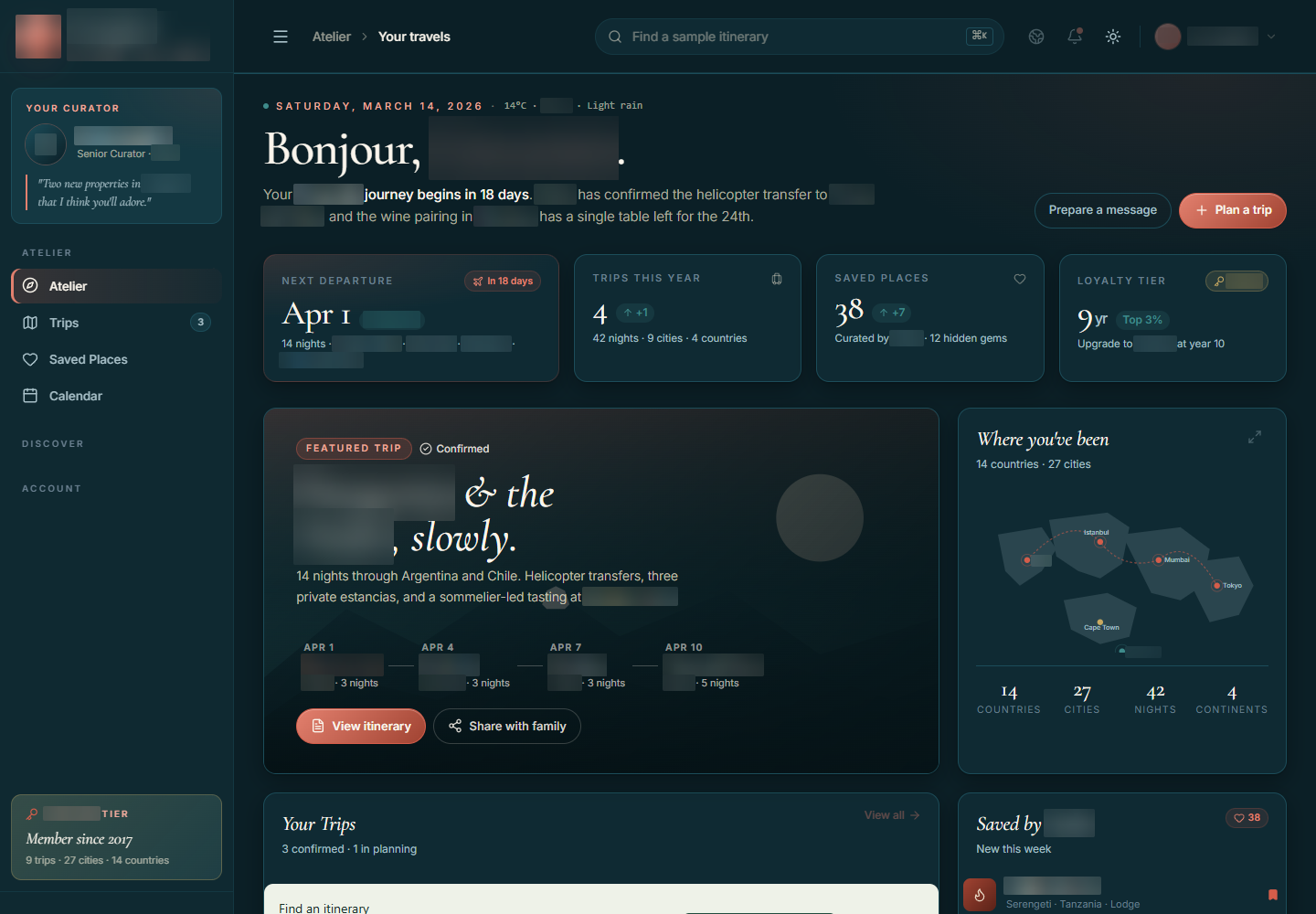
We brought the exploratory side of travel into a working interface: a place to collect possibilities and turn them into plans that can be reviewed.
Explore the work ↓Destinations, departure preferences, saved places and itinerary details are related, but they are not the same kind of information.
The travel planner brings those elements into a shared planning workspace. The challenge was to keep the experience inviting while giving each action a clear place to land.
We connected trip cards, itinerary views, saved ideas and message drafts. The interface supports planning and preparation, with sample itineraries and locally saved trip ideas.
The workspace supports both the trip that is still an idea and the itinerary that is ready for closer review.
Use trip cards and saved places as entry points into the workspace.
Record destination, preferred departure and traveller count as a trip idea.
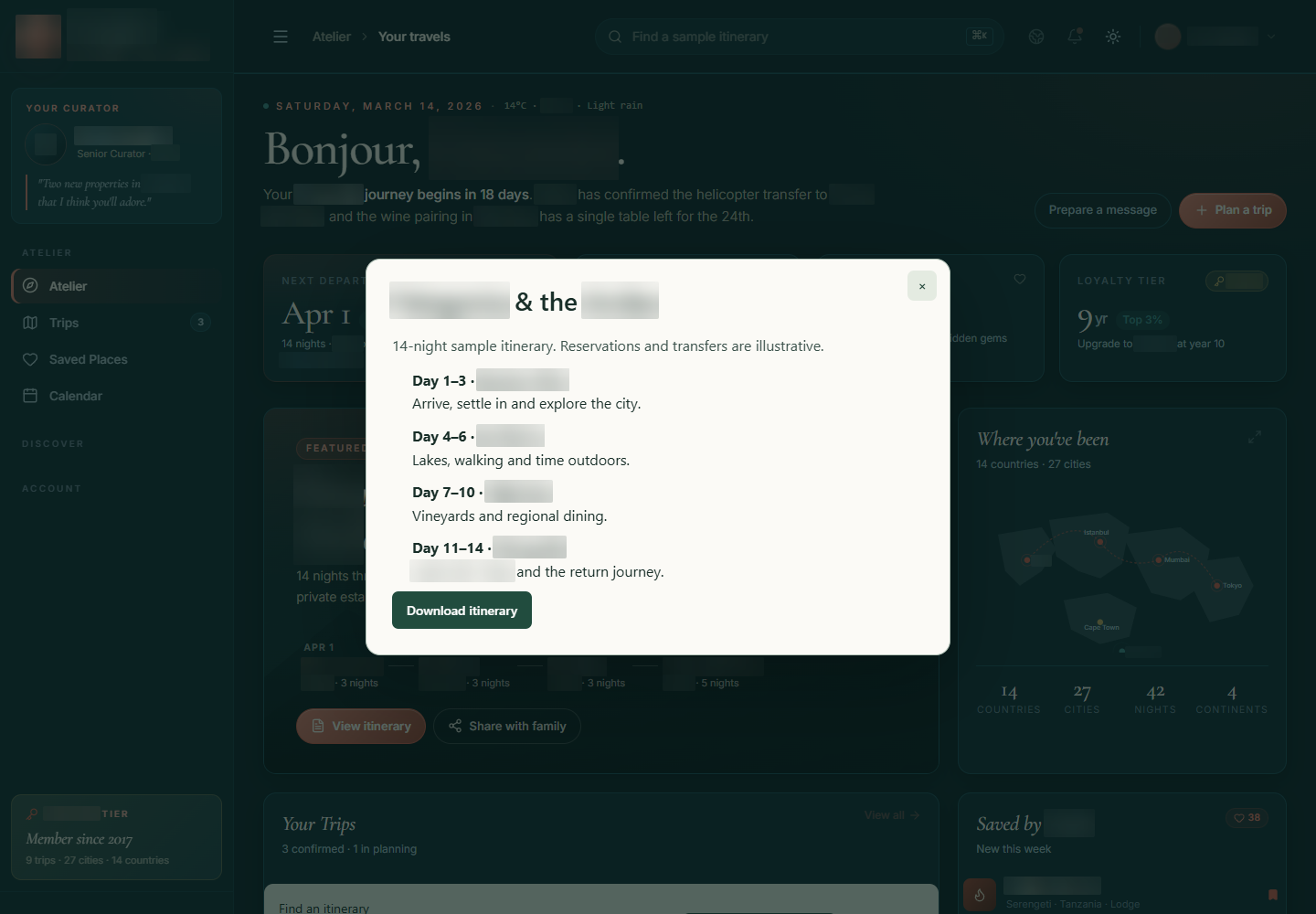
Open a structured route view and download its details.
Draft a message for the next planning discussion and export it.
The trip-idea form asks for a destination, preferred departure and number of travellers. Those fields give an idea a useful shape without treating it as a reservation.
Ideas are saved in local storage and can be removed when plans change. That makes the workspace useful across visits in the same browser, while keeping the distinction between a saved possibility and a booked journey explicit.
A trip card is an invitation to look closer. We connected it to an itinerary view so the visitor can move from a visual summary into the route details and download the plan.
Search narrows the trip rows, and the message composer produces an exportable draft. These interactions give the planning controls specific outcomes without suggesting that a reservation has been made or a message sent.
The finished front end connects travel inspiration to the practical work of saving, inspecting and discussing a plan.
Trip ideas and itinerary details have distinct roles within the workspace.
Locally saved destinations, departure preferences and traveller counts can be revisited or removed.
Itinerary and message exports carry the planning work beyond the screen.
Travel-planning interface with sample itineraries, local trip-idea storage, search and downloadable plans and message drafts.
Start with the overview, then explore the details. These are screenshots of the original interface, with names, contact details and identifying information blurred for privacy.
2 views Select any view to exploreWe build interfaces that help people collect information, make choices and carry their work forward.