Establish the focus.
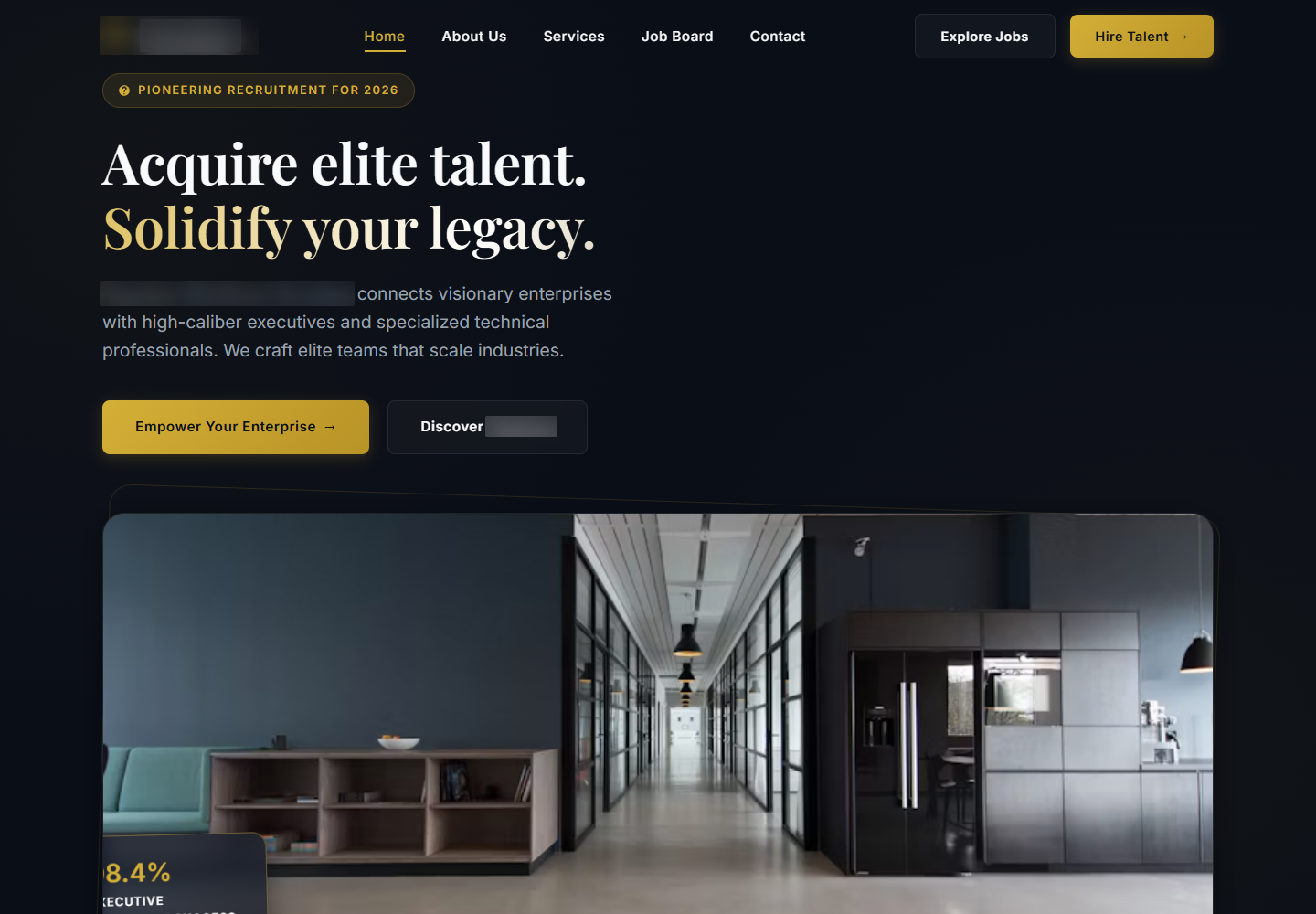
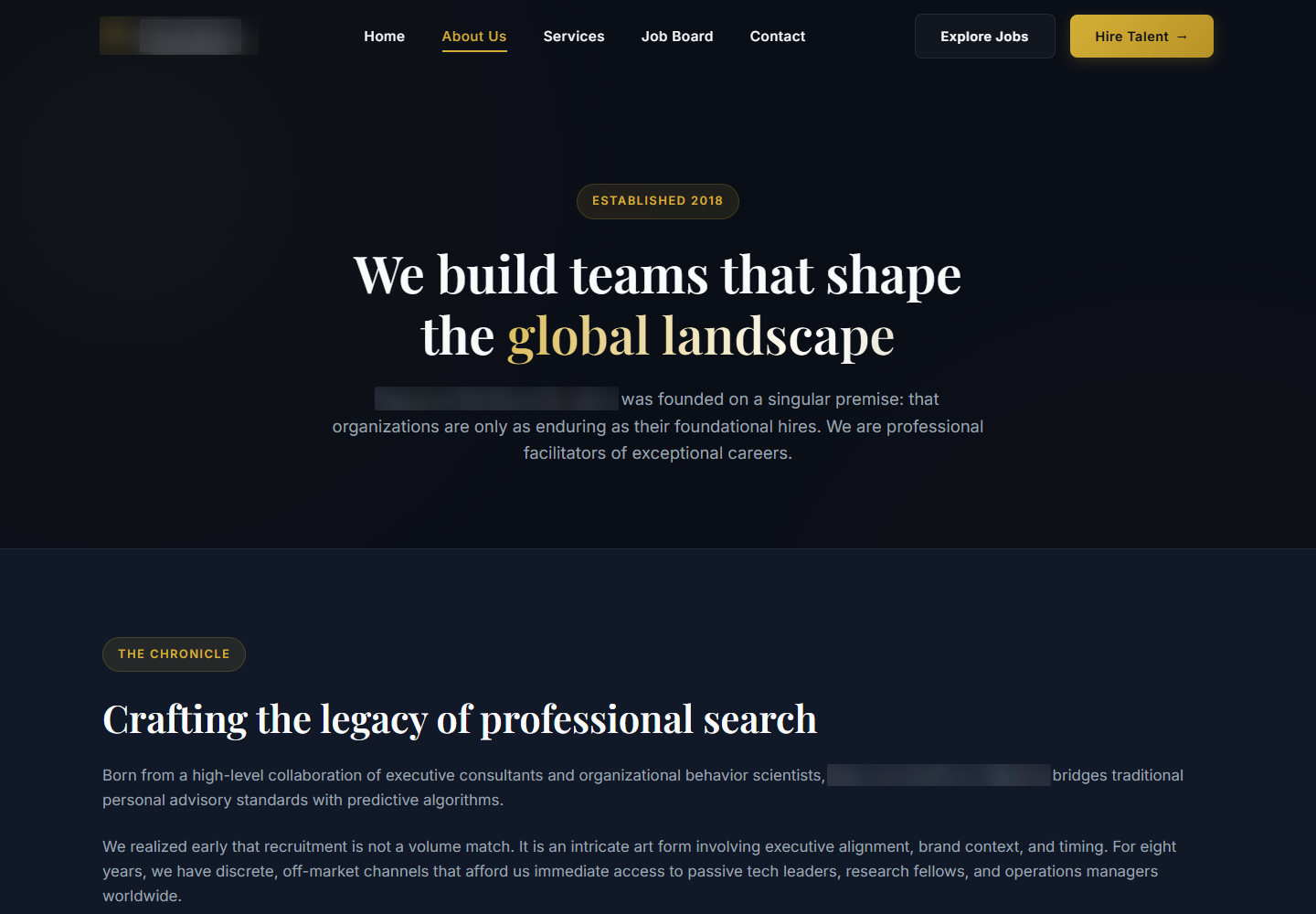
Present the firm's recruitment positioning and industry expertise.
A recruitment website that connects employer services, job discovery and candidate application preparation.
We built around the two sides of a recruitment business: organisations looking for expertise and people looking for their next role.
Explore the work ↓An employer and a candidate visit a recruitment website with different questions.
An employer needs to understand the service and areas of expertise. A candidate needs to find relevant roles and see how to express an interest. A single undifferentiated call to action would make both journeys harder to follow.
We organised five pages around the firm, services, jobs and contact, with a dedicated role-discovery experience. The shared visual identity holds the site together while the navigation gives each audience a practical starting point.
The employer-facing material and candidate-facing interactions sit within one website, each with a distinct purpose.
Present the firm's recruitment positioning and industry expertise.
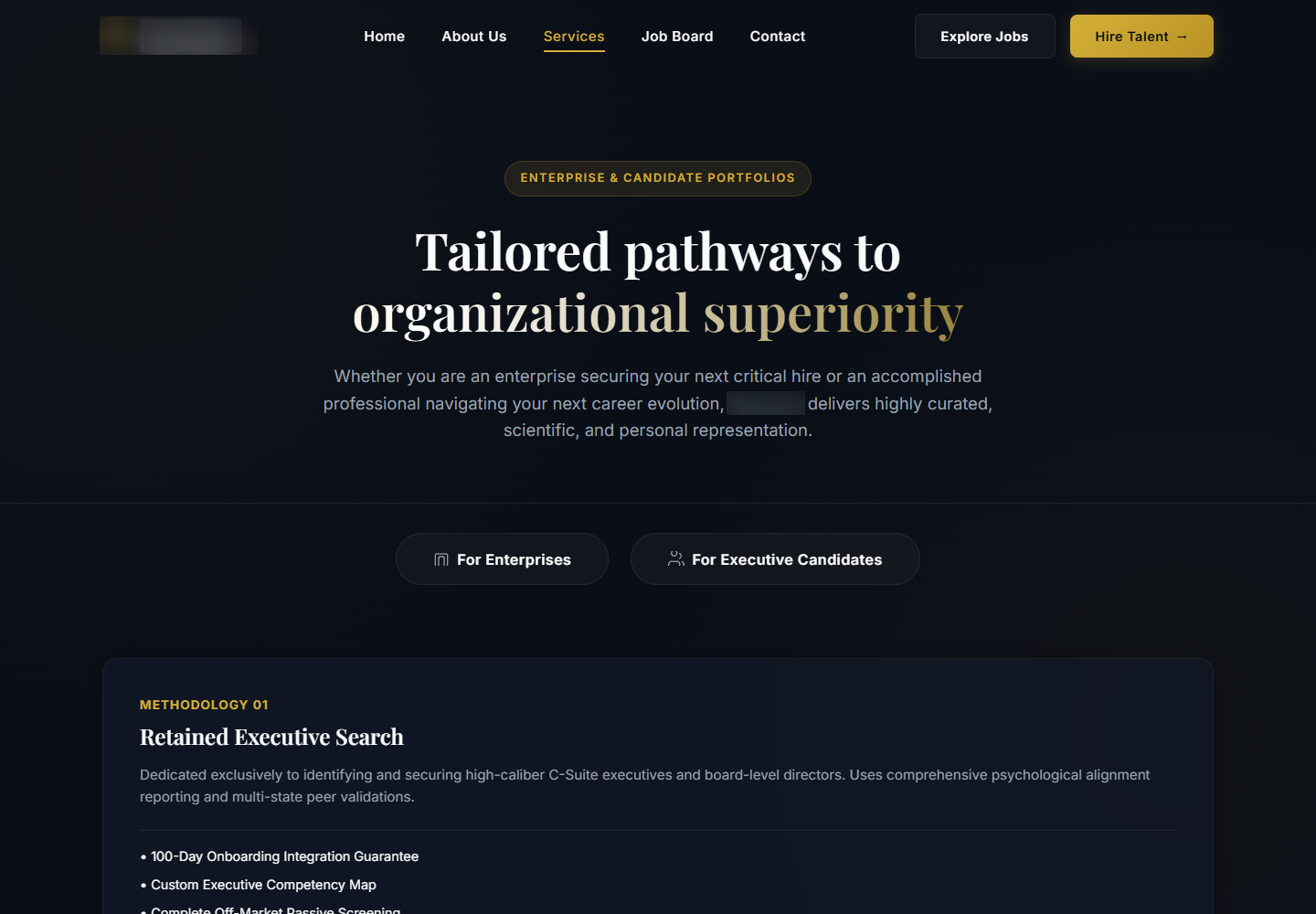
Use service panels to organise the different areas of support.
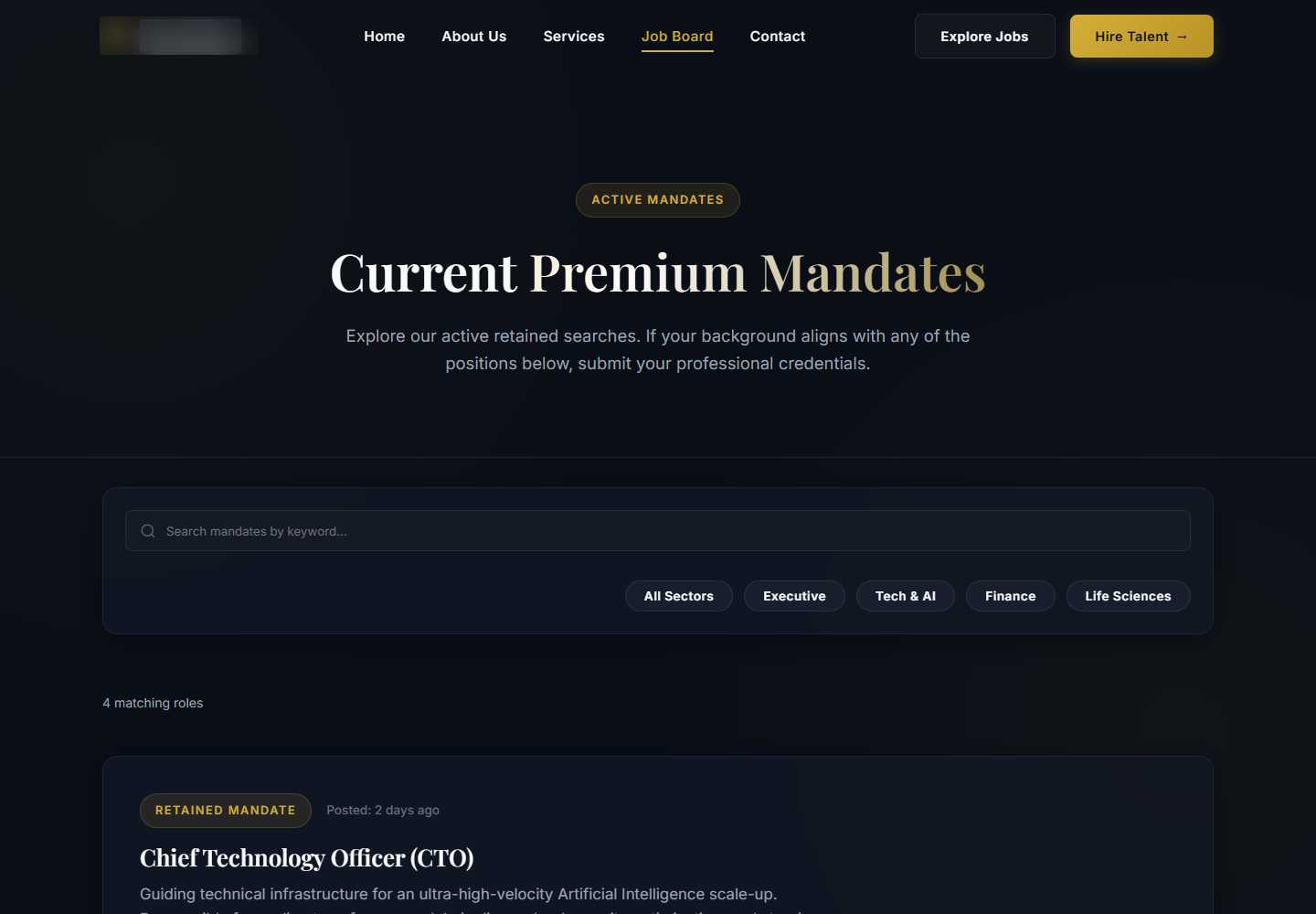
Combine category filtering with keyword search across the available listings.
Carry the selected role into a focused form and a reviewable application summary.
Job discovery often starts broadly and becomes more specific. We connected the selected category with the search text so both constraints shape the visible roles.
Changing a category preserves the current query. Changing the query preserves the current category. The result count and empty state follow the same logic, keeping the interface understandable when there are few matches or none at all.
Opening an application from a job listing carries the role title into the form. That context matters: a candidate should not have to reconstruct which position started the interaction.
We made the form prepare a summary that can be checked and downloaded, including the selected role and file name. It describes the application accurately as a prepared request; candidate documents are not uploaded and no submission is implied.
The work brings service presentation and role discovery into a connected recruitment website.
Service information supports employers, while a dedicated jobs page supports candidates.
Category and keyword controls apply together, including an explicit no-results state.
Application preparation retains the position and candidate context in one reviewable view.
Five-page recruitment website with service panels, combined job search and filtering, application forms and downloadable request summaries.
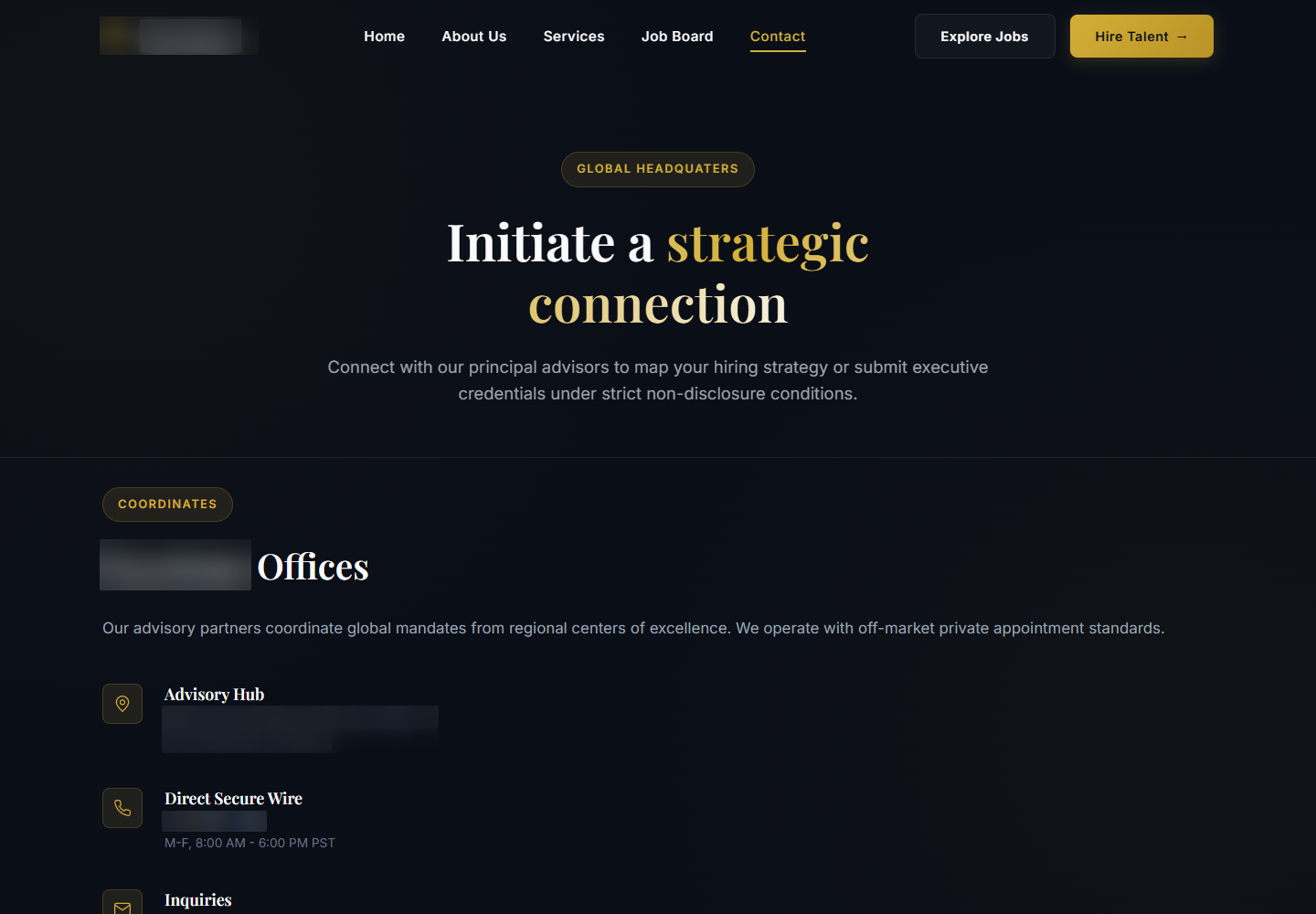
Start with the home page, then explore the details. These are screenshots of the original website, with names, contact details and identifying information blurred for privacy.
5 views Select any view to exploreWe design websites that give different audiences a clear route through the same business.